
Kids Need Discipline to Thrive (Without the Power Struggles)
Published July 28, 2026
Kids Need Discipline to Thrive (Without the Power Struggles)
If the word discipline makes you think of punishments, raised voices, or constant battles, you’re not alone.
But real discipline—the kind that helps kids thrive—isn’t about being harsh. It’s about giving kids a dependable structure so they can build confidence, follow through, and handle life without needing you to manage every moment.
Discipline is the difference between:
A child who waits to be reminded
And a child who knows what to do next
What discipline actually is (and what it isn’t)
Let’s clear this up.
Discipline is:
Clear expectations
Consistent routines
Follow-through (from parents and kids)
Simple consequences that make sense
Discipline is not:
Shame
Fear
Constant punishment
A parent “winning” an argument
When discipline is done well, it feels less like control and more like stability.
Why kids need discipline to thrive
Kids don’t thrive in chaos—even if they seem fine in the moment.
Structure helps kids:
Feel safe: Predictability lowers anxiety.
Build self-control: They practice doing hard things in small doses.
Develop independence: They learn to manage tasks without constant help.
Grow confidence: They can say, “I did that,” and mean it.
Discipline isn’t limiting. It’s a framework that lets kids grow.
The hidden benefit: discipline reduces arguments
A lot of family conflict isn’t about the task—it’s about the negotiation.
“Do I have to?”
“Why now?”
“Just five more minutes.”
Discipline removes the daily debate by making the plan the boss.
When the routine is consistent, you’re not the bad guy. You’re just following the system.
Discipline works best when it’s specific
Kids can’t hit a target they can’t see.
Instead of:
“Be responsible.”
“Help out more.”
“Get ready faster.”
Try:
“Backpack hung up and lunchbox on the counter by 4:00.”
“Brush teeth, pajamas on, and in bed by 8:30.”
“Homework started within 10 minutes of getting home.”
Specific expectations turn discipline into something kids can actually succeed at.
A simple discipline system you can start this week
You don’t need a total reset. You need a few consistent anchors.
1) Pick 3 daily “must-do” habits
Choose the small set that will make the biggest difference.
Examples:
Morning: get dressed + teeth brushed
After school: homework start time
Evening: tidy-up + bedtime routine
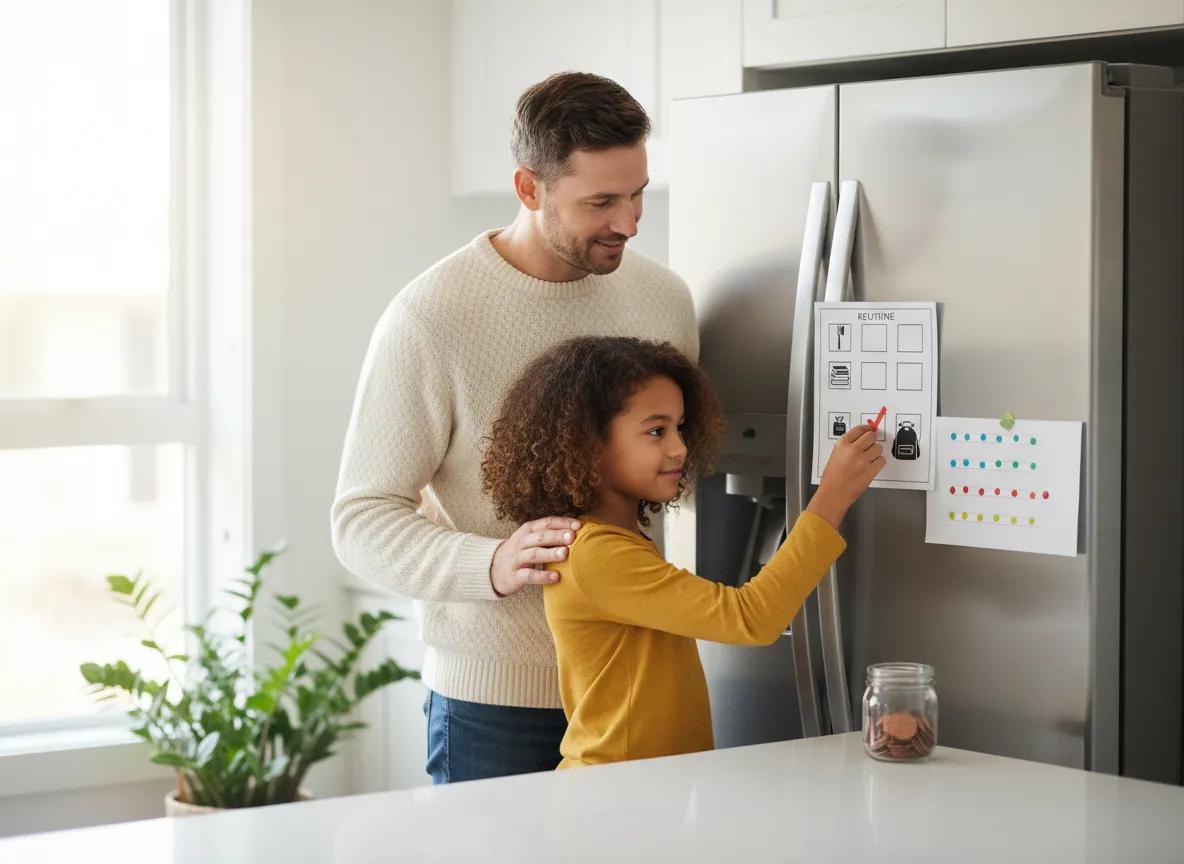
2) Make the routine visible
Kids do better when they can see what’s next.
A checklist on the fridge
A whiteboard
A simple “quest list” on a phone/tablet
The goal is to reduce verbal reminders.
3) Use a short, calm check-in (not a lecture)
Try:
“What’s next on your list?”
“Show me what’s done.”
“What do you need to finish this?”
This keeps you in coach mode instead of referee mode.
4) Add a structured reward (optional, but powerful)
Discipline is easier to practice when progress feels real.
A simple points system works because it connects:
Effort
Progress
Reward
Keep rewards consistent and predictable (not random, not emotional).
What happens when discipline is missing
When there’s no structure, kids often learn habits that look like:
Waiting until the last second
Avoiding tasks until someone steps in
Relying on mood instead of routine
Getting stuck in “I don’t know what to do” moments
That doesn’t mean they’re lazy. It means they don’t have a system yet.
The goal isn’t perfect behavior—it’s capability
Discipline isn’t about raising kids who never mess up.
It’s about raising kids who can recover, reset, and keep going.
“I forgot” becomes “I have a checklist.”
“I don’t want to” becomes “I know what happens next.”
“You can’t make me” becomes “I’m building my own streak.”
That’s thriving.
How Outperformed supports discipline (without the nagging)
Outperformed is built to make discipline feel like progress—not punishment.
Gamified task lists that turn responsibilities into clear “quests”
Points and levels that make effort visible
Smart scheduling that reduces decision fatigue
Multi-child profiles so each kid has their own expectations
The result: fewer reminders, fewer arguments, and more follow-through.
The takeaway
Kids need discipline to thrive because structure builds safety, confidence, and independence.
Start small:
Make expectations specific
Keep routines consistent
Use calm check-ins
Add structured rewards if you want extra momentum
When discipline becomes a system (not a showdown), your kids don’t just behave better—they grow stronger.