
How Kids Build Discipline
Published October 11, 2026
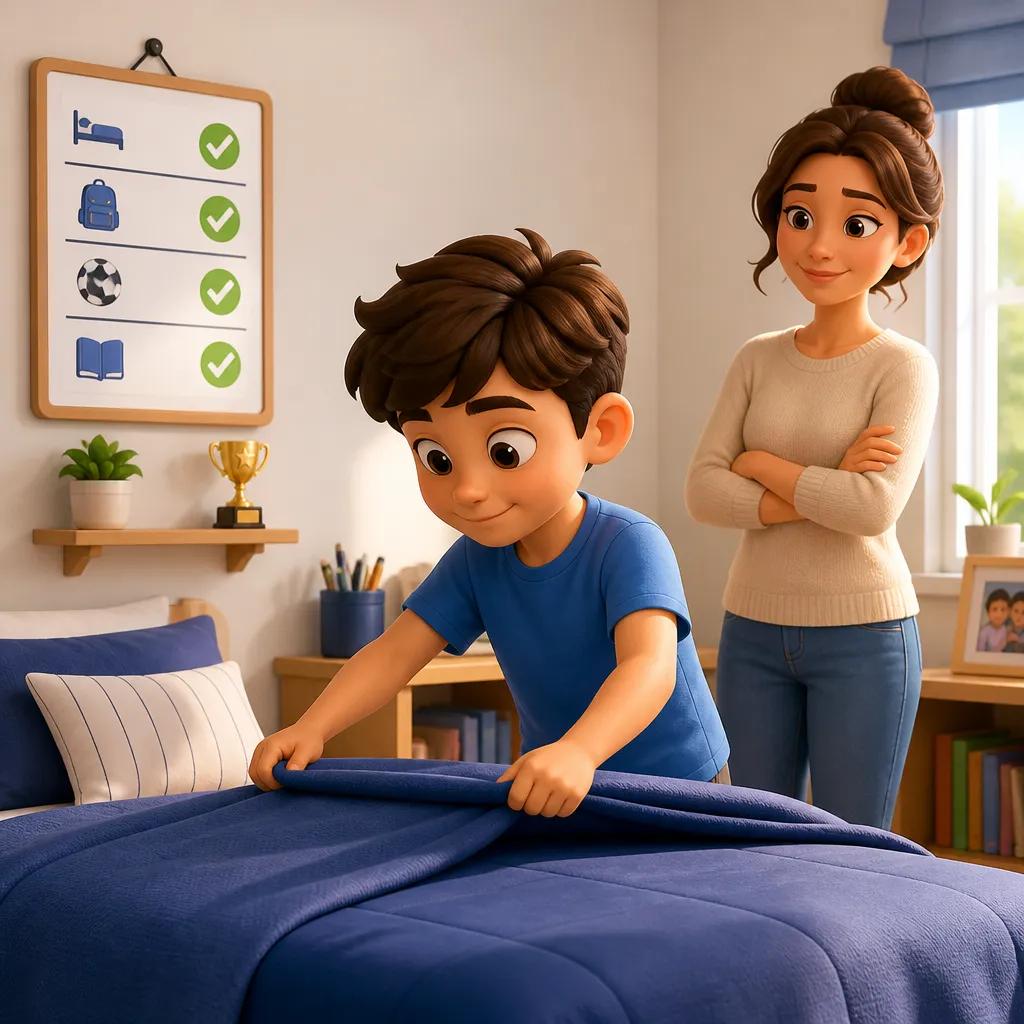
How Kids Actually Build Discipline
“Your kid needs more discipline.”
Parents hear some version of that all the time. But discipline is often talked about like it is a personality trait—some kids have it, some kids don’t, some kids are naturally motivated, and others are lazy.
That is usually too simple.
Discipline is a skill, and like most skills, it develops through practice.
Discipline Is Not the Same as Motivation
Motivation is how much you feel like doing something. Discipline is what helps you do it anyway.
A child might feel motivated to clean their room if there is a reward waiting. They might feel motivated to study when a test is tomorrow. But real discipline starts developing when they learn to follow through even when the task is boring, inconvenient, or not immediately rewarding.
That takes time.
Kids Need Structure Before They Can Create Their Own
Adults often expect children to manage themselves before they have had enough practice doing it.
Remember your homework. Clean your room. Get ready on time. Put your things away. Finish what you started.
Those things sound simple to an adult, but to a child they require planning, memory, impulse control, and the ability to choose a boring task over something more interesting.
That is why structure matters.
Clear routines and expectations give kids something to follow before they are capable of creating that structure entirely on their own.
Clear Expectations Beat Constant Reminders
One of the most exhausting parenting patterns is repeating the same instruction over and over.
“Clean your room.”
“Did you clean your room?”
“Go clean your room.”
“I already asked you.”
Eventually, the parent is frustrated, and the child may learn that the first few requests do not really matter.
A clear system changes that. Instead of endlessly repeating yourself, the expectation can be established ahead of time. The child knows what needs to be done, when it needs to be done, what counts as complete, and what happens afterward.
Predictability makes discipline easier to practice.
Consequences Are Part of Learning
Consequences sometimes get confused with punishment, but they are not necessarily the same thing.
A consequence is simply an outcome connected to an action.
Complete the responsibility and earn the reward. Ignore the responsibility and lose access to the reward. Make a poor choice and experience a reasonable result.
That teaches something important: your actions affect what happens next.
Children need opportunities to experience that connection while the stakes are still small.
Repetition Builds the Habit
One successful chore does not create discipline. Neither does one good homework session.
Discipline develops when children repeatedly practice following through.
The basic pattern is simple:
Expectation → Action → Consequence → Repeat
Over time, the process becomes more familiar. Eventually, the goal is that less external structure is needed because the child has started developing internal structure.
That transition does not happen overnight. It happens through repetition.
Discipline Does Not Require Constant Yelling
A parent can be firm without being aggressive.
In fact, yelling often becomes more likely when expectations are unclear, inconsistent, or constantly renegotiated.
A calmer system can be more effective:
“Here is what needs to happen.”
“Here is what happens afterward.”
Then follow through.
The consistency matters more than the volume.
Where OutPerformed Fits
OutPerformed gives parents a way to make responsibilities, expectations, rewards, and consequences visible.
Parents can assign tasks, kids can see what they need to complete, progress can be tracked, rewards can be earned, and consequences can stay consistent.
Instead of discipline being an abstract idea, it becomes something children actually practice.
The goal is not to control every action. It is to help kids build habits they will eventually manage themselves.
Discipline Is Built Before It Is Needed
By the time someone reaches adulthood, discipline affects almost everything: school, work, money, fitness, relationships, health, and long-term goals.
But those habits do not suddenly appear at 18.
They are built through years of small choices. Getting up when you would rather stay comfortable. Completing something boring. Keeping a promise. Doing the task even when nobody is watching.
That is what discipline actually looks like.
Not yelling. Not motivational speeches. Not pretending to be tough.
Just consistent follow-through, again and again.
Build better habits with OutPerformed.